Spa and Pool Heating Problems
SoCalGas Co. is giving out 300.00-750.00 rebates for new gas heaters...if you are in or near the "box" formed by the 118,405,101,and 23 freeways call 818-345-7665 (POOL)
or click "contact form" above left
Heater Will Not Come On
Low Water Flow at Pressure Switch
Heaters have a pressure switch inside which assures an adequate flow of water is going through heater. If the flow is inadequate, the switch will not complete circuit.
1)THE MOST common - the filter is dirty.
2)Pump or skimmer basket is full of debris.
3)Pump impeller is clogged.
4)The water level is too low, so the skimmer sucks air. Sometimes the water level is just high enough to start flow going and turn on heater, but as pump catches prime, a vortex or swirl of water creates a funnel of air into skimmer which impedes flow and shuts off heater.
5)Is weir flap or bobber stuck on skimmer?
6)Is pressure switch or wire connections defective?
7)Perhaps the pump is running,but not pumping water. The link below pertains to pump problems:
Pump problem troubleshooting
everything from this point on pertains to gas heaters ONLY
No pilot
1A)Perhaps the pilot assembly orifice is blocked completely and pilot will not light.
1B)Pilot partially blocked leading to small flame and inadequate heat to thermocouple to make proper voltage to keep pilot valve on (it shuts off as soon as you release knob from pilot position)
1C)Thermocouple is defective
1D)Gas valve is defective - if heater has not run in a long time,the pilot and/or main gas diaphragms can get stuck closed. Sometimes a good whack with a hammer on the side of valve can un-stick the diaphragms. (this goes without saying,but if you use this method,make ABSOLUTELY sure valve closes when it should - if there is any doubt,replace)
2)If you have a lazy or ignorant pool service tech he or she may backwash your D.E. filter into the equipment area until the D.E.(the white powder inside filter) builds up until its touching the bottom of the heater box and possibly even going inside. This acts as a wick to keep moisture on the metal box of heater and will not only corrode the heater box, but the whole burner tray as well as the pilot assembly itself.
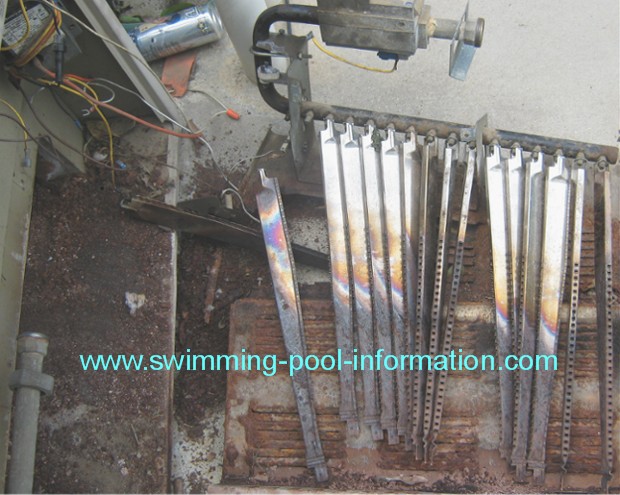
Newer heaters such as the Sta-Rite Max-E-Therm heater have a composite shell which will not rust. A less expensive solution is to have the backwash affluent pump away from the equipment area using a hose or pipe on backwash.
3)Is gas on?
4)Perhaps your heater does not have a constant pilot - it may have a spark ignition pilot. Think of a spark plug with ceramic body and metal core shooting a spark to gap at end. Perhaps the spark is not going to top of pilot but to pilot frame or burner tray. On some older models the wire is not insulated at the bottom of pilot,so simply bending wire away from area where the spark is arcing will do the trick - with the power off of course.
5)You may have a ceramic ignitor as shown below:
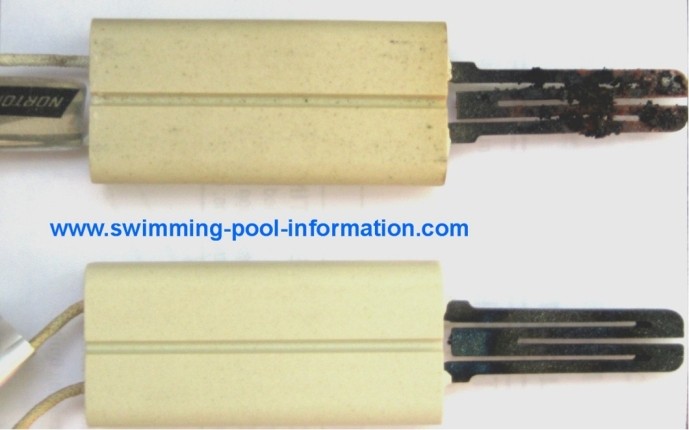
The part above is an ignitor assembly. Newer style heaters use this instead of pilot to ignite main burners. The two wires go to the ignition control module. When the ignition control modules gets "ok" readings from its various safety devices, the control sends power to the ignitor and then opens up gas valve. In this case, the ignitor was not heating up and glowing red like it should, so the control sensed no flame and shut the gas valve off. The new ignitor is obviously on the bottom. It is made from a ceramic/metal composite that is VERY reliable (no pilot orifices to ever get clogged) but also VERY fragile (a slight bump can shatter it like glass)
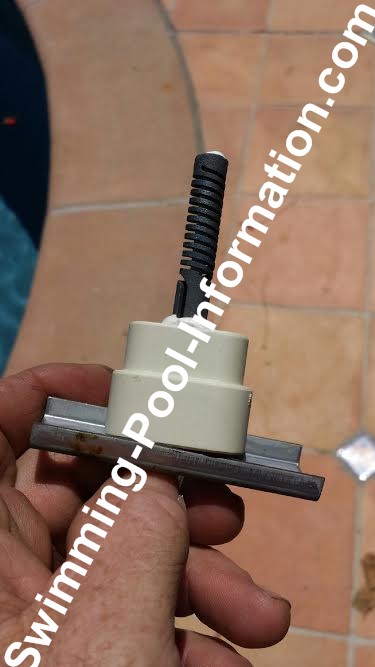
Shown below is the newer more robust model on some heaters:
Heater Cycles (turns on and off constantly)
1)Water level too low - sometimes the water level is just high enough to start flow going and turn on heater, but as pump catches prime, a vortex or swirl of water creates a funnel of air into skimmer which impedes flow and shuts off heater. As pump tries to prime again, the heater will fire then shut off again, cycling on and off.
2)Rusted headers - if your heater has iron headers that have rust,the water flow may not reach hi limit switches causing heater to shut off until they cool. If rust is severe,entire heater may shake and make noise from water boiling inside.
3)Your heater has some type of flow control,often similar to a car's radiator thermostat that lets water flow from heat exchanger as its heated. If this device is not working properly,heater can cycle.
4)Dirty heat exchanger (either debris on top or soot) can cause heat to come out bottom of burners inside heater and trip safety heat sensors.
5)Some heaters have a flame sensor that may get coated with gas by-products - this can cause 2 different problems:
A)Flame sensor takes longer to heat so heater may fire several times and turn off until sensor is hot enough to tell gas valve to stay open.
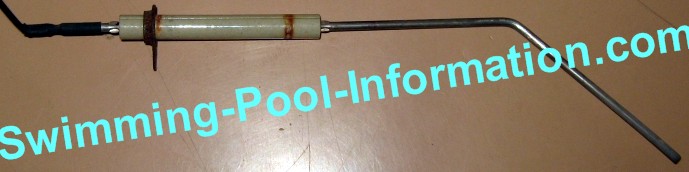
B)Heater may come on and off and never stay on...on metal rod type flame sensors (such as the one shown below) you can scrape sensor with a knife to clean off by products - its not recommended to use sandpaper or file because they may leave contaminants on sensor
Perhaps Your Heater Has a Critter Problem
RAT BASTARD !

Spiders
Spiders - spiders crawl into the burner orifices and make webs inside that block the flow of gas....this causes four main problems:
A) If you have a pilot, and the blocked orifice happens to be on the burner where pilot is attached, the pilot may not catch until the gas from another burner reaches it - causing a little explosion which blows out pilot and shuts off heater.
B) If all orifices are blocked, heater may not fire at all.
C) If the orifices are partially blocked, heater may fire but the slow flow will not burn completely - leading to longer heating times and/or a strong gas smell which can sometimes burn the eyes.
D) Perhaps the spiderweb is in the pilot assembly itself and pilot will not light.On many heaters, its not too hard to clean orifices with a piece of 12 gauge copper wire bent into a loop or hook without even dismantling heater.
Rodents
Rodents,mostly rats - They cause heater problems in two main ways:
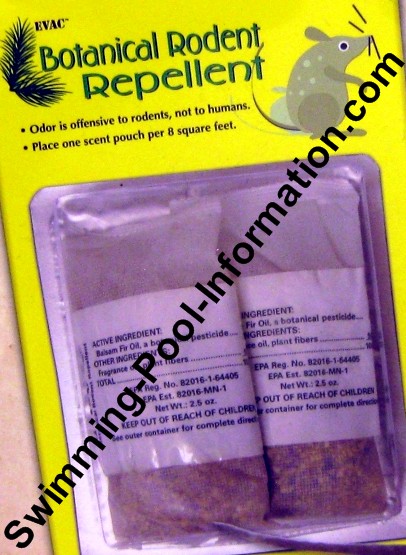
A)Rodents love to chew on heater wiring! I don't believe they eat it, but they seem to like chewing the insulation off the wires, sometimes chewing straight through. Spraying DEET (commonly known as "OFF" bug spray) on the wires MAY prevent this - rodents hate the taste,but for larger rats you may have to go to DEFCON 1 and place rat poison inside heater,which should keep it away from pets and children,but there is always the chance of a pet ingesting the dead rodent - there is a new product out that uses pine scent to keep rodents away from equipment in the first place. (Shown below) Also moth balls may work - apparently rodents dislike the smell of anything clean and sanitary.
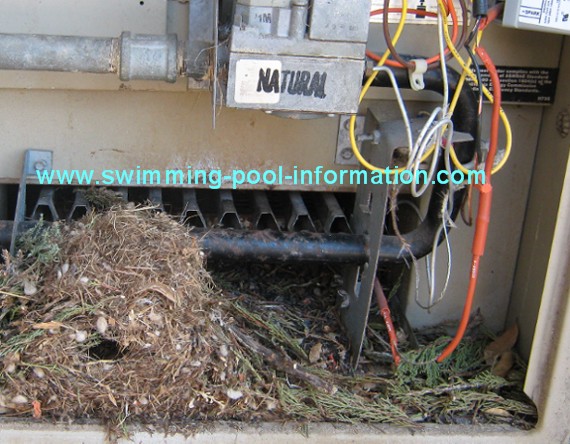
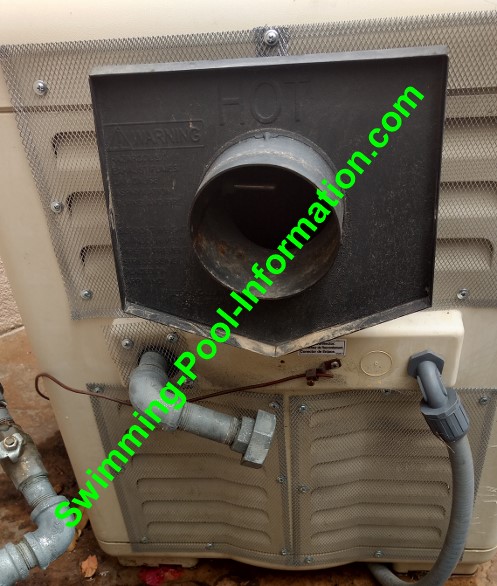
B)Rats and mice also like to make a nest on the top of the burners or on top of the heat exchanger.This causes flames to roll out the bottom and cut off the fusible link assembly (a safety device to prevent fires). Or heat may not be able to escape out the vent and the heaters' high limit may trip.(another safety device) On newer designed heaters it is harder for rats to get inside heater.On the photo below showing mouse nest, you can see wires with the insulation chewed off. Putting chicken wire around the top of heater and any places rats can get in sometimes helps. Another thing I should add is that it is probably a good idea to wear a respirator when cleaning/vacuuming out rodent debris because I have heard their droppings can contain nasty bugs that can lead to serious health problems if breathed in!
I have heard moth balls work good too as repellant
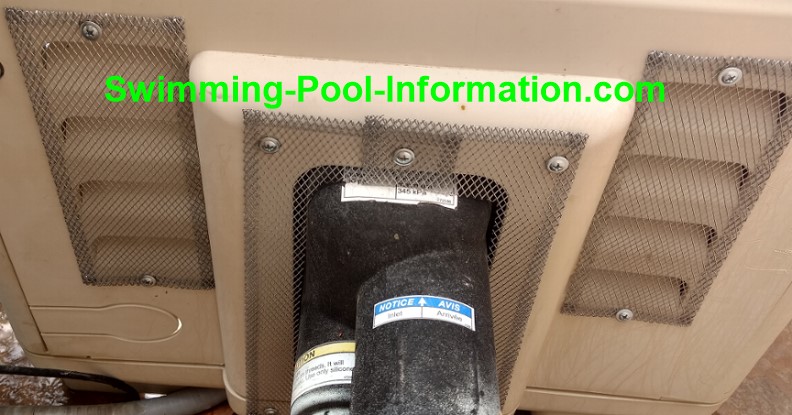
The photo above and below shows custom made screens from MK Industries made specifically for the MasterTemp heater
Heater Takes Too Long To Heat And/Or Has Strong Odor
1)Sometimes,in a pool/spa combination,if you are trying to heat the spa the valves may be in the wrong position or they have leaking gaskets allowing cold water from pool to enter spa which will increase the time it takes to heat.
2)If pump is pumping water too fast through heat exchanger water will take longer to heat - has a new higher flow pump been installed? You may need to install a by - pass valve.
3A)As mentioned above,blocked/dirty orifices and burners will cause many heaters to burn gas incompletely and it will have a strong odor that can burn the eyes and cause soot to build up on heat exchanger.
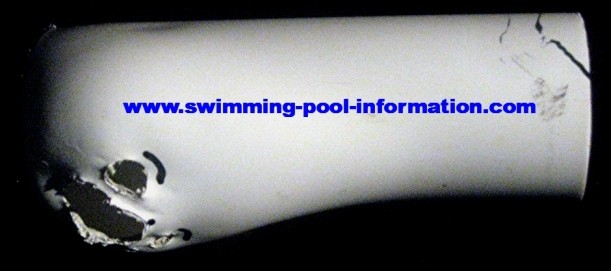
3B)Fully blocked orifices on multiple burners so heater is running at less than full capacity.The photo below shows the amount of force that can be built up with a combination of pump pressure and heat.