[?] Subscribe To
This Site

XML RSS
Add to Google
Add to My Yahoo!
Add to My MSN
Add to Newsgator
Subscribe with Bloglines

Home
RSS FEED
Virginia Graeme Baker
Hot Deals
Ecosmarte System
Pumps and Motors
Controls
Alternative Sanitation
Pool Filters
Leaks
Pool and Spa Heating
Pool Resurfacing
Automatic Cleaners
Robotic Cleaners
Tile Cleaning
Pool Covers/Fences
Above Ground Pools
Swimming Pool Photos
Calculations/Formulas
Hiring a Poolman
Spas
Whole House Filtration
Services I Provide
Contact Me
Links
 

Multi Speed/Two Speed Swimming Pool Pumps

The link at the bottom of this page will take you to a multi speed pool pump energy calulator so you can see your energy savings and daily cost to run pump.

California code of regulations, title 20 states:"Pool pump motors with a capacity of 1 HP or more (thats TOTAL horsepower with Service Factor included, more on service factor in "Choosing The Right Pump" section) which are manufactured on or after January 1, 2008, shall have the capability of operating at two or more speeds with a low speed having a rotation rate that is no more than one-half of the motors maxinum rotation rate."

Now in the real world there are still single speed motors for sale after January 1st, 2008 and manufacturers can always change the label on box to say waterfall or spa jet motor instead of pool motor. But if you are changing your motor and or pump anyway, its in your best interest to save electricity plus you may get a nice rebate too!

So how do they save electricity and how do they work? Well lets say your swimming pool pump is an energy efficient pump, and your pool is 20,000 gallons. We will base this comparison on electricity cost of 15 cents per kilowatt hour.

1) If you have a 1 horsepower pump, you must run pump 8 hours to turn over(run 20,000 gallons through filter) the water once. That comes to $655.00 a year.

2) If you have a 2 horsepower pump, it would take a little over 5 hours to turn over water once for a cost of $563.00 a year.

3) A two speed pump running on low speed could turn 20,000 gallons a day for somewhere around $250.00 to $300.00 a year, depending on horsepower and type of pump.

4) A multi speed permanent magnet motor could turn over the same volume of water in 10 hours for a cost of $115.00 a year, PLUS have up to 3 horsepower available for things such as spa jet power!

Now these comparisons are general: your pump may NOT be energy efficient or in good working order and your electrical costs could be more, on the other hand perhaps you pay only 10 cents a kilowatt hour, but if you combine the energy savings along with rebates you may get from your electrical company,its easy to see these pumps will pay for themselves!

Another thing about two speed motors...manufacturers have told me they use 1/4 the energy on low speed while pumping 1/2 the water volume (low speed is half the RPM's of high speed), so if the low speed is run twice as long, you should still be saving 1/2 the energy cost. But - when you look at the amp ratings on the motor spec plate for high speed versus low speed, the low speed amperage looks more like 1/3 of the high speed. However, this is peak amp rating, most likely used on the start of motor. If you are looking to find out the gallons per minute flow rate of a pump on low speed, check the pump chart for the normal speed and divide in half. The reason for the savings in energy is that there is less friction between the water and pipe, fittings,equipment, etc. on low speed.

As a general rule, figure about half the water flow at 1/8 the energy for a permanant magnet multi speed motor, which equates to 1/4 the energy for the same water flow.

Wow!...hope I have'nt confused you.

Multi speed pumps offer several advantages over single speed pumps

1)Much quieter(can be run at night when temperatures are cooler,leading to longer motor life)

2)In some areas electricity is less expensive at night especially in summer

3)Water filters better at low speed,resulting in smaller particles being filtered out(especially noticeable at night with pool light)

However,there are some circumstances where low speed cannot be used:

1)If your swimming pool equipment is much higher or lower than pool level (unless you have a "programmable" system where the pump can come on at high speed for a few minutes to catch prime and then switch to low speed.

2)If you have solar panels up high on a two story roof (again if you have programmable system with valve that closes when solar panels are not being used then the pump can be switched to a lower speed at these times.)

3)If you have a suction type automatic pool cleaner,it may not work on low speed. It depends on the type of cleaner and the HP of pump. For example,I have found that Kreepy Krauly pool cleaners work great on low speed,however some cleaners like Pool Vac or Navigator may work on a 2 HP low speed pump but not a 1.5 HP low speed pump. If you have a dedicated line for a pool cleaner and automatic controls,the pool cleaner can be programmed to come on high speed for an hour, and then the valve turned by actuator to skimmer and motor switched to low speed for rest of night. Also, multi speed pumps generally have a 3 H.P. impeller, unlike most two speed pumps, so the impeller pulls more water even at lower speeds.

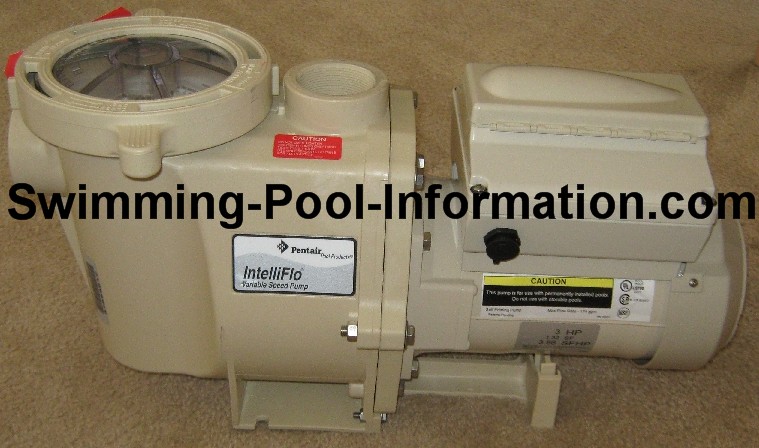
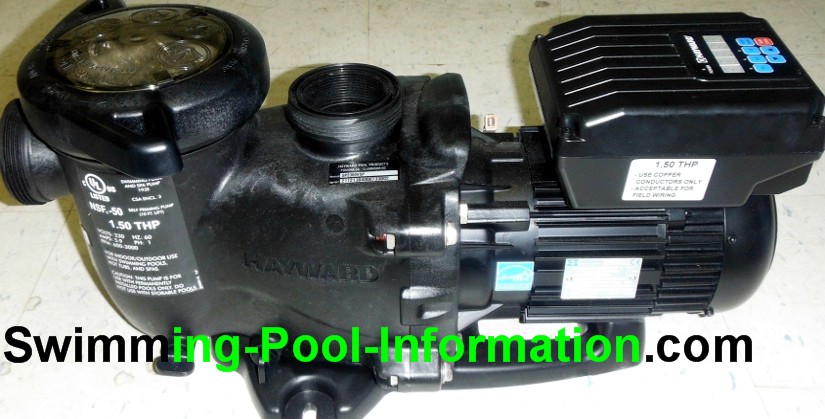
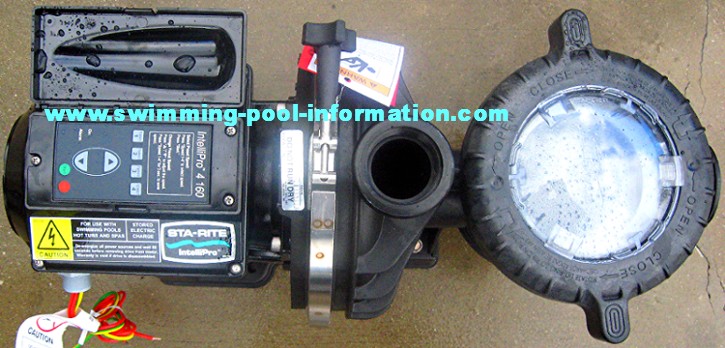
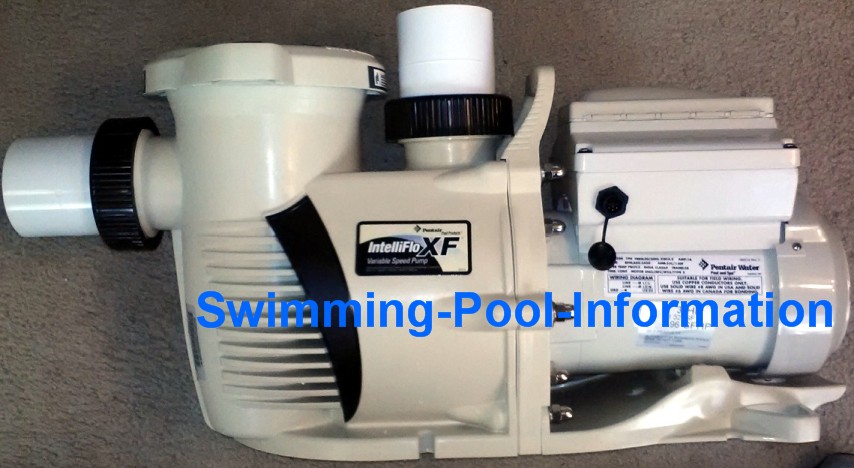
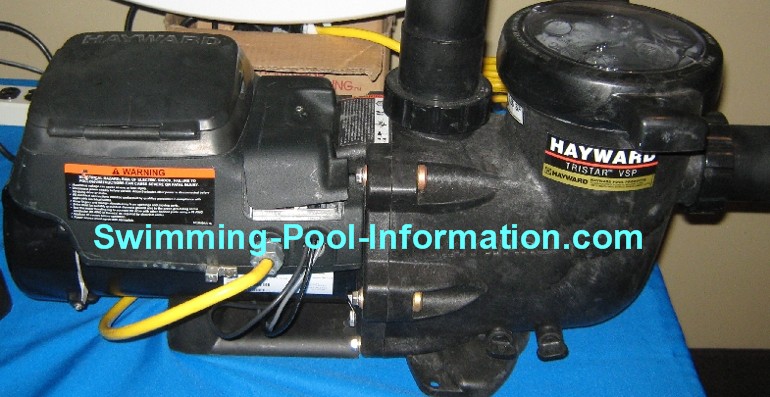
Below are two types of multi speed pumps


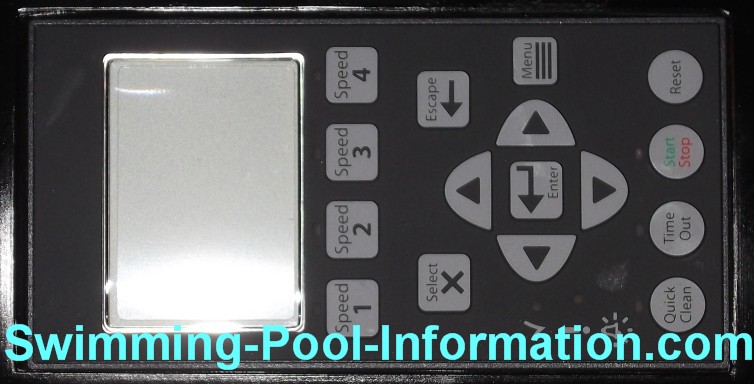
Below are the keypads for pumps


Multi-speed pumps work in the same way as two speed pumps,but can be run at any RPM(revolutions per minute). This means they can be run at even lower speeds than 2 speed pumps. (A two speed pump runs at about 1725 RPM's at low speed)...I have installed multi speed pumps that filter the water fine(AND also run an automatic pool vacuum) at 1400 or 1500 RPM....Multi speed pumps have several advantages over two speed pumps,and there are several companies that make or are in the process of releasing multi speed pumps this year(2008) but here are a few advantages of some of the models out now (not ALL multispeed pumps have ALL these features):

1)Can save more electricity than 2 speed pumps(depending on speed selected and 2 speed pump's HP). With multi speed pumps you get a lower low setting and a higher high setting. A two speed pump has a set horsepower at high speed,and low speed is half the RPM's...so with a multi speed pump you can use less electricity than a two speed pump on day to day filtering, but get higher flow than a two speed pump for something like a waterfall or spa jets.

2)Have built in software that shuts pump off if it runs dry saving costly repairs

3)Built with permanent magnet motors that produce less heat than regular induction motors,and also 30% more efficient

4)Has software that autmatically finds the most efficient speed to run(RPM's)

5)If you have automatic controls,you set a different speed for different functions(low speed for filtering,high speed for spa jets,medium for a waterfall or other water feature,etc.

6) Rebates that now apply for 2 speed/multi speed pumps may only apply to multi speed pumps in near future

Disadvantages:

1)More expensive than two speed pumps

2)If you are in an area where you are only paying 10 cents a kilowatt hour,it may not be worth it to buy a multi speed pump (instead of a 2 speed pump) unless:

A):You have a waterfall,fountain,spa,or the equipment is raised above the level of pool or some other reason you may need a higher horsepower or more rpm's than a two speed pump

B)You simply want the MOST energy savings and the best equipment.

The link below will take you to a pool pump energy cost calculator that will give you a basic idea of energy savings with one of these type of pumps:

multi speed pool pump energy calculator


this owner built site built using SBI